
Lot 627
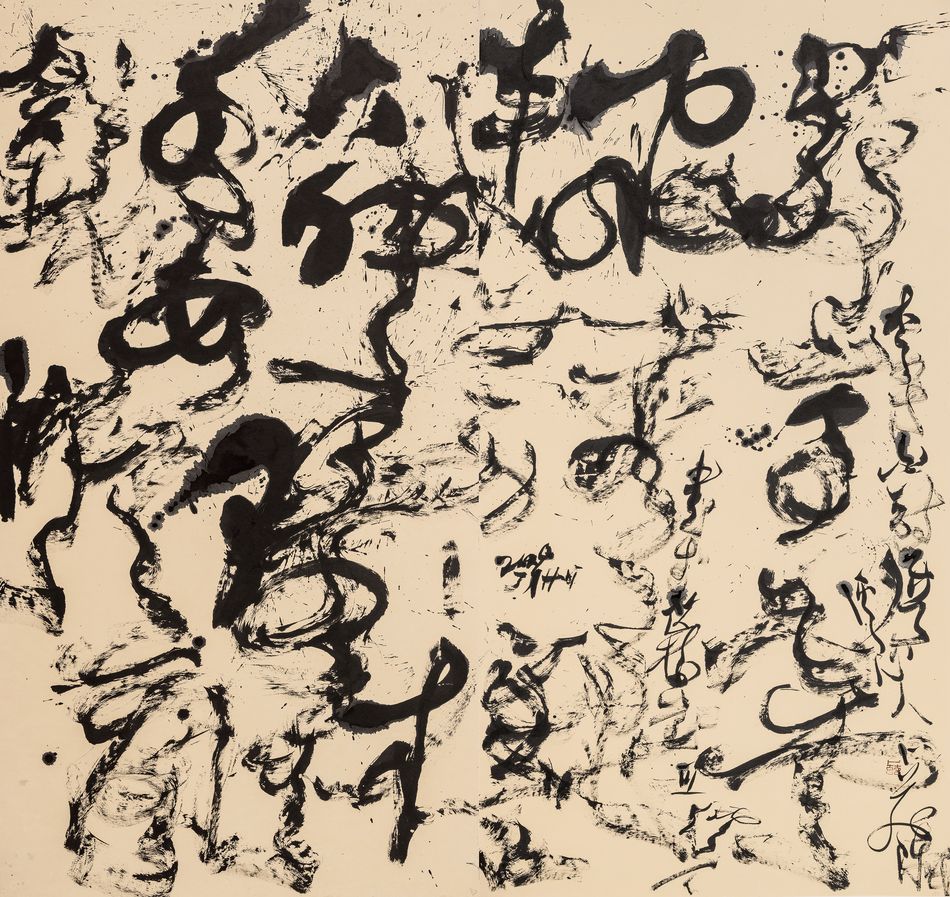
Mountain Jingting and White Clouds (Diptych)
PU TZU (Bu Zi) (Taiwanese, 1959 - 2013)
2009
Ink on paper
180 x 194 cm
Estimate
TWD 180,000-280,000
HKD 44,000-69,000
USD 5,600-8,800
CNY 39,000-61,000
Sold Price
Signature
Signed PU Tzu in Chinese
With one seal of the artist
PROVENANCE
Private collection, Taiwan
With one seal of the artist
PROVENANCE
Private collection, Taiwan
+ OVERVIEW
This work presents PU Tzu’s calligraphic transcription of a poem by Li Bai. The poem evokes the landscape of Mount Jingting, where white clouds drift above the peaks and the hues of the mountains merge with the brightness of the sky. Below the mountain, a clear and tranquil stream reflects the sky and drifting clouds, as if the light of sky had descended upon the water’s surface. The poetic imagery is expansive and luminous, conveying a sense of serenity and distance. Located in Anhui Province, Mount Jingting is part of the Huangshan mountain system. Since ancient times it has been celebrated for its beauty and repeatedly admired by poets, thus to become an enduring cultural landmark.
The brushwork in this calligraphy moves between swift and measured rhythms, with the writing progressing in successive waves, much like the ever-shifting clouds described in Li Bai’s poem. The dynamic movement resembles a kind of “ink-and-brush” taiji unfolding across the paper. Calligraphy and taiji share similar principles: both emphasize the circulation of breath and the coordination of bodily rhythm, seeking equilibrium between stability and tension within continuous, circular motion. In taiji, force is not projected in a straight line but generated through rotation and returning movement. Likewise, in this work PU Tzu activates the lines through revolving brushstrokes, allowing the strokes to advance continuously through cycles of release and restraint rather than through direct, linear thrusts, echoing the philosophy of taiji.
The flexible rotation and controlled force of PU Tzu’s brushwork also create the effect known as “eight-directional rotating strokes.” Although the lines move swiftly and with sweeping momentum, the overall composition remains carefully balanced. The distribution of space and density within the work is measured, and the rhythm of opening and closing forms is handled with precision, achieving equilibrium among strength, speed, and structural order. Interestingly, in the inscription PU Tzu records the date using Arabic numerals, a small yet telling sign of his bold and innovative character. Through its structural depth and spirited expression, this work embodies the grandeur of wild cursive script, demonstrating both PU Tzu’s profound grounding in classical calligraphy and his distinctive personal creativity.
The brushwork in this calligraphy moves between swift and measured rhythms, with the writing progressing in successive waves, much like the ever-shifting clouds described in Li Bai’s poem. The dynamic movement resembles a kind of “ink-and-brush” taiji unfolding across the paper. Calligraphy and taiji share similar principles: both emphasize the circulation of breath and the coordination of bodily rhythm, seeking equilibrium between stability and tension within continuous, circular motion. In taiji, force is not projected in a straight line but generated through rotation and returning movement. Likewise, in this work PU Tzu activates the lines through revolving brushstrokes, allowing the strokes to advance continuously through cycles of release and restraint rather than through direct, linear thrusts, echoing the philosophy of taiji.
The flexible rotation and controlled force of PU Tzu’s brushwork also create the effect known as “eight-directional rotating strokes.” Although the lines move swiftly and with sweeping momentum, the overall composition remains carefully balanced. The distribution of space and density within the work is measured, and the rhythm of opening and closing forms is handled with precision, achieving equilibrium among strength, speed, and structural order. Interestingly, in the inscription PU Tzu records the date using Arabic numerals, a small yet telling sign of his bold and innovative character. Through its structural depth and spirited expression, this work embodies the grandeur of wild cursive script, demonstrating both PU Tzu’s profound grounding in classical calligraphy and his distinctive personal creativity.
Related Info
Refined Brushwork:Ink Paintings & Works of Art
Ravenel Spring Auction 2026 Taipei
Sunday, May 24, 2026, 4:00pm